
What a healthcare website has to do now
A hospital or clinic website is the one channel the practice fully controls, and since October 2026 it is also the one most clearly inside the NMC's definition of a medium. The guidelines allow factual, verifiable information: name, location, contact details, departments, facilities, equipment, services, emergency services, accreditation and charges (8.3(i), 9.1). They treat a hospital's doctor directory as patient information, materially distinct from advertising (9.1). And they rule out testimonials, before-and-after galleries and superlatives.
That suits a well-built site. Patients want the same things the rules allow: who the doctors are, what they are qualified in, when they are available, what things cost and how to get there.
What's included
- Discovery and planning. Sitemap, content structure and scope, built around the questions patients ask.
- Design. A clean, calm interface that works on a phone in a waiting room, with accessible colour contrast and readable type.
- Development. Custom builds, WordPress, or static sites, whichever suits the practice and the team that will update it. We also build app-based systems for appointments and clinic workflows.
- Doctor directory. One uniform card for every doctor: name, recognised qualifications with years, specialty, registration number, OPD days and languages, with Physician structured data.
- Department and procedure pages. Answer-first pages that explain what a procedure involves, how to prepare and what it costs.
- Fee and package pages. Factual fees with inclusions, exclusions and the date. Lawful disclosure of charges is expressly allowed (8.1(x) proviso), and Maharashtra's Clinical Establishments Bill 2026, still pending, would require hospitals to publish rates for principal services.
- Forms and privacy. Consent text, a privacy-policy link and a named grievance officer on every enquiry form, as the IT (SPDI) Rules 2011 already require, ready for the DPDP Act's duties from May 2027.
- Speed and accessibility. Core Web Vitals within Google's thresholds, images sized properly, no autoplay video, keyboard and screen-reader access.
- Structured data and AI access. Hospital or MedicalClinic, Physician, Service, FAQPage and BreadcrumbList markup, plus robots.txt and llms.txt that let AI crawlers read the facts.
- Maintenance. Updates, content changes, security checks and technical support after launch.
Hospitals and clinics
| Hospital website | Clinic or doctor website | |
|---|---|---|
| Core pages | Departments, doctor directory, procedures, emergency, accreditation, fees, locations | About the doctor (factual), services, fees, timings, location |
| Doctors | Every doctor in the same format; no hero portrait of one doctor (8.3(ii)) | The doctor's qualifications with years and registration number |
| Content | Department education hubs written by named clinicians | Condition explainers and "what to expect" pages |
| Integrations | Appointment systems, HIS links, multiple branches | Booking link or form, WhatsApp for opted-in patients |
How it works
- Discovery and planning. We understand the practice, its patients and goals, then define the sitemap, content structure and scope.
- Design and prototyping. We create the visual direction and page designs around a clear patient journey.
- Content and compliance review. We write or edit the content with your clinicians and check every page against the NMC guidelines.
- Development and integration. We build the site and connect forms, analytics, booking and other tools.
- Testing and launch. We test across devices and browsers, set up redirects from old URLs so existing rankings are kept, and go live.
- Maintenance. We keep the site updated and secure.
What we won't build
- Testimonial sliders, star-rating widgets or patient-story pages on a doctor's site (Explanation V, 6.2).
- Before-and-after galleries (8.1(v)).
- Superlative or "most advanced" headlines, or success rates and patient counts (8.1(iii), 8.1(ix)).
- A hero banner promoting one doctor on a hospital site (8.3(ii)).
- Autoplay videos, hidden duplicate layouts and headings typed in by scripts, which slow the site and hide content from crawlers.
Proof
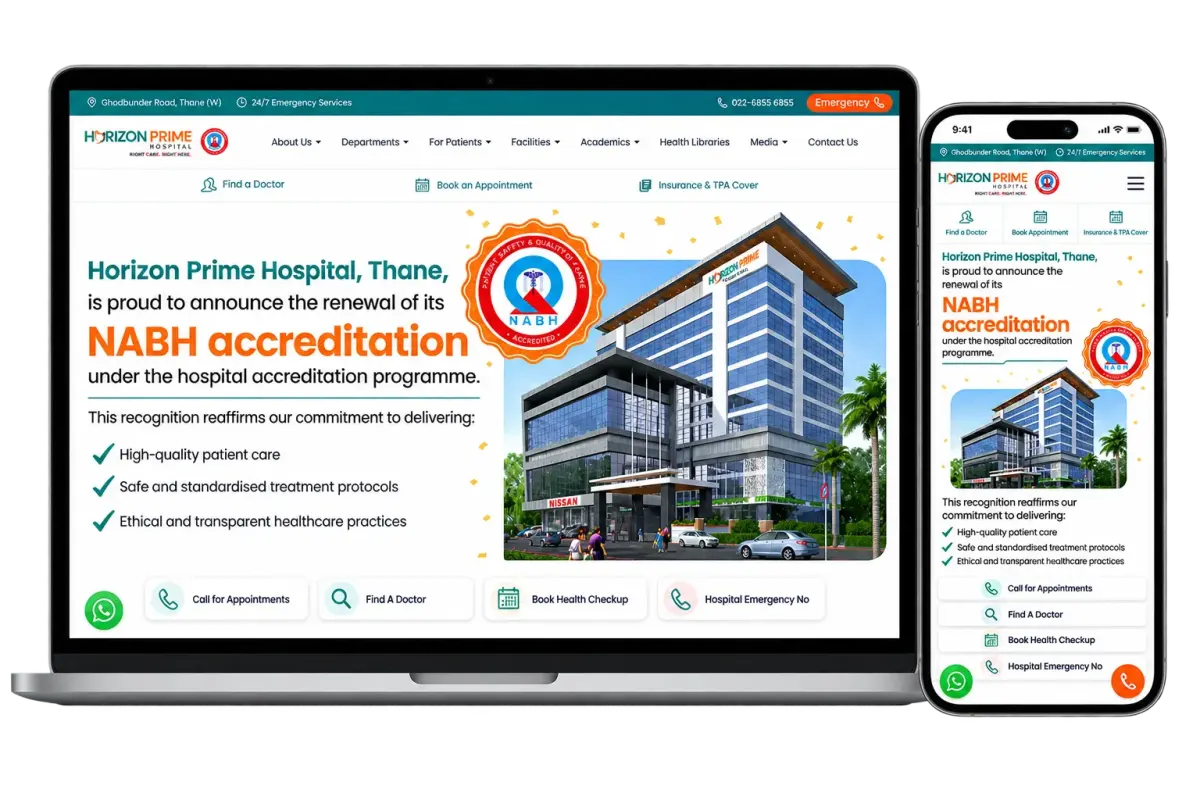
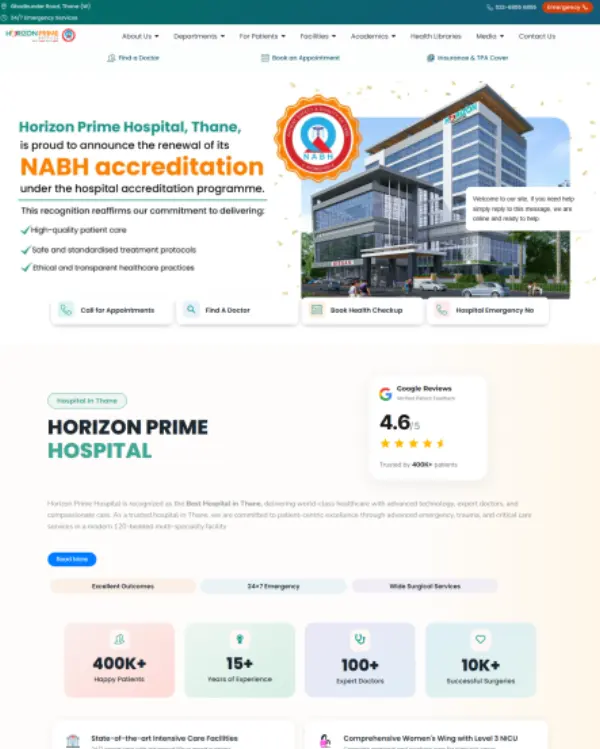
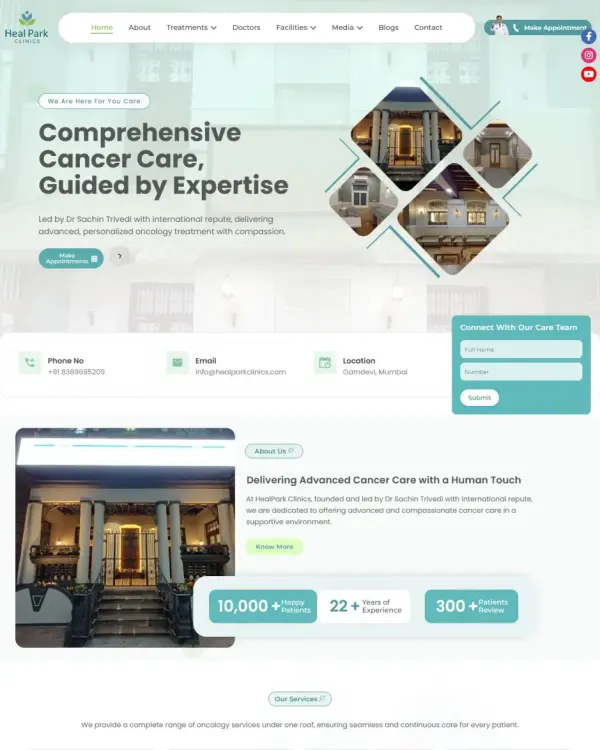
Live healthcare sites shown in our portfolio include Horizon Prime Hospital and Heal Park Clinics (see the Heal Park Clinics case study). Across all sectors we have built 300+ websites.
Read what a hospital website must contain in our hospital marketing guide.
Websites from our portfolio
Work for this
See our doctors on The Ranveer Show, Figuring Out by Raj Shamani and TEDxNMFC, the hospital films we produced and press coverage in Times Now, Hindustan Times and News18.








Frequently asked questions
Factual, verifiable information: departments, facilities, equipment, services, emergency services, accreditation, contact details and charges. Any doctor named should appear with qualifications and registration details, ideally in a uniform directory, which the guidelines treat as patient information (9.1).
No. Doctors must not share patient testimonials or reviews for promotion, and consent does not make them permissible (Explanation V, 6.2). A section answering the questions patients commonly ask is a lawful and more useful alternative.
We recommend it. Factual disclosure of charges and packages is allowed (8.1(x) proviso), fee pages answer the question patients are most hesitant to ask, and Maharashtra's pending Clinical Establishments Bill would require hospitals to publish rates.
Either can work. WordPress suits teams that edit pages often; a static or custom build is faster and harder to break. We recommend one after discovery, based on who will update the site and what it must integrate with.
Google's Core Web Vitals threshold is a Largest Contentful Paint under 2.5 seconds for real users on mobile. Most patients open a clinic website on a phone, often on a slow connection, so we build to that budget.
Yes. Maintenance covers updates, content changes, security checks and technical support, on a fixed monthly fee.