
How patients look for orthopaedic care in Mumbai
Orthopaedic decisions are slow and family-led. A knee or hip replacement is usually researched for weeks, often by a son or daughter on behalf of a parent. People search by symptom and by procedure ("knee pain when climbing stairs", "knee replacement recovery time", "partial vs total knee replacement"), then by place ("knee replacement hospital near Mulund"). They want to know cost, recovery, how long the hospital stay is, and whether surgery is needed at all. Sports injuries and fractures are different: younger patients, more urgency, more mobile searches and more Google Maps.
The orthopaedic teams that win this research phase publish honest answers at procedure level, with a named, verifiable surgeon behind them.
The rules that matter for orthopaedics
The NMC guidelines of 6 October 2026 hit orthopaedic marketing harder than most. Clause 8.1(iii) bars doctors from advertising personal achievements, success rates or the number of patients treated, and from outcome promises. Clause 8.1(v) bars publishing cases for promotion, advertising surgical results and showing before-and-after images. Clause 8.1(vi) bars statements that create unrealistic expectations or hide risks. For hospitals, clause 8.3(ii) bars the promotional portrayal of an individual doctor, so the "star surgeon" banner is out. Clause 8.1(i) bars marketing meant to create unnecessary demand for procedures.
| Tactic | Status | What we do instead |
|---|---|---|
| "Walking the same day" or similar outcome promises | Red | Honest recovery timelines with ranges and what affects them |
| Number of replacements performed, success rates | Red for doctors | Qualifications with years; registry participation listed as a CV fact |
| Patient walking videos and testimonials | Red | "Questions patients ask before knee replacement" pages and videos |
| Hospital quality data with method and benchmark | Amber | A quality page with numerator, denominator, period and source, not ads |
| Department-level Google search ads | Amber | Factual ads for the department, every doctor equally or none |
| Procedure explainer video by the surgeon | Green on the hospital's own site with a transcript | Same; on social platforms it is Amber |
What SpoiledIdeas does
For hospital departments
We build a department hub and one page per procedure and condition (knee replacement, hip replacement, arthroscopy, spine, sports injuries), each answering the questions families ask, with a uniform doctor directory showing qualifications, years and registration numbers. We add factual department-level search ads by intent, patient-education video with transcripts, and a cost-and-insurance page that states inclusions, length-of-stay assumptions and the date.
For solo clinics
For an orthopaedic surgeon with a private clinic, we keep it factual: a correct Google Business Profile in the doctor's real name, a website with consultation fees, OPD timings at each hospital, qualifications and registration, and education pages on common conditions. No paid ads in the doctor's own name, no patient stories, and no review drives run by the doctor or their staff.
How we work
- Map the procedures and conditions you treat to the questions patients search for.
- Check your existing pages, listings and videos against the NMC clauses above.
- Write procedure pages with your surgeons, who review every clinical statement.
- Film short education videos and publish them with transcripts and summaries.
- Run factual department search ads where it is lawful and useful.
- Report monthly on visibility, enquiries by department and pages read in full.
Proof
Our multispeciality hospital SEO case shows the department-keyword approach we use, and our podcast case study shows how long-form patient education in Marathi kept earning views for a specialist clinic. Hospital brands such as Apex Hospitals and Zen Multi Speciality Hospital are among the healthcare brands we have worked with.
Where we work
We work with orthopaedic teams across Mumbai, including the hospital clusters in Mulund, Andheri and Thane. Most orthopaedic departments start with healthcare SEO, AEO and GEO, medical video and factual Google ads.
Work for this
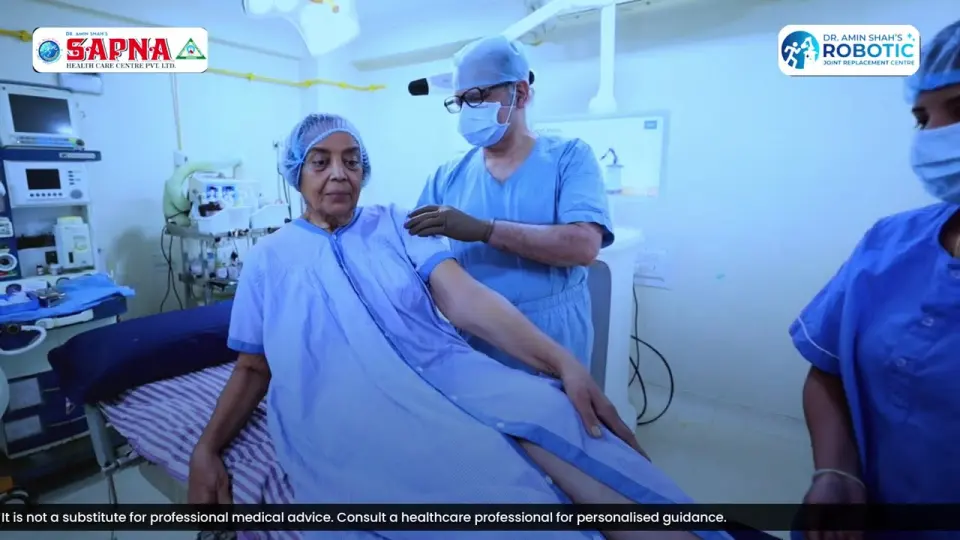
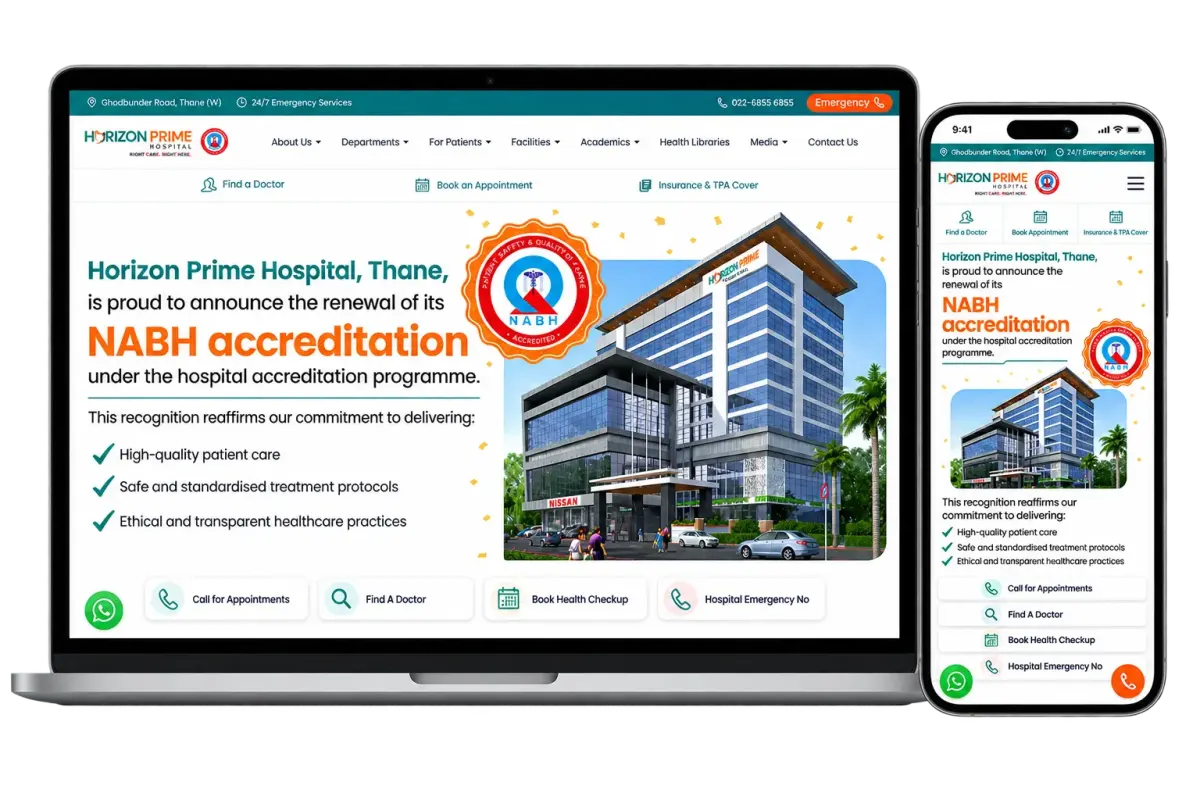
See our doctors on The Ranveer Show, Figuring Out by Raj Shamani and TEDxNMFC, the hospital films we produced and press coverage in Times Now, Hindustan Times and News18.





Frequently asked questions
No. NMC clause 8.1(iii) bars doctors from advertising the number of patients treated or professional success rates. Show qualifications with years and registration details instead, and list registry participation as a factual CV item.
Not as promotion. Clause 8.1(v) bars advertising surgical results, and clause 6.2 says patient consent does not make a testimonial or success story permissible. Use honest recovery guides and answers to the questions patients ask.
Possibly, as quality data rather than advertising: a recognised indicator, with numerator, denominator, period, source and a published benchmark, on a quality page. We treat this as Amber and recommend counsel review before publishing.
A hospital can run factual, department-level search ads with keyword and location targeting only, featuring every doctor equally or none. Paid ads in an individual doctor's own name have no legal route under the NMC rules.
Ranges by procedure type, what is included and excluded, the assumed length of stay, insurance and scheme options, the date, and a line that the estimate is confirmed in writing. No discounts or countdowns.